End Cap Retail Display System – Philips & Versuni
“Running a parallel rollout across countries is usually a logistical nightmare. BGR cut the standard production time in half without any hidden costs or delays. The peace of mind was huge for our team, and the final result looked incredible in-store.”
— Carlos Ovando
Most retail displays are built to be replaced. Replacement is built into the budget: every season, every campaign, every refresh, and the cycle restarts. Even the “premium” tier rarely solves this. Better surfaces, same lifespan.
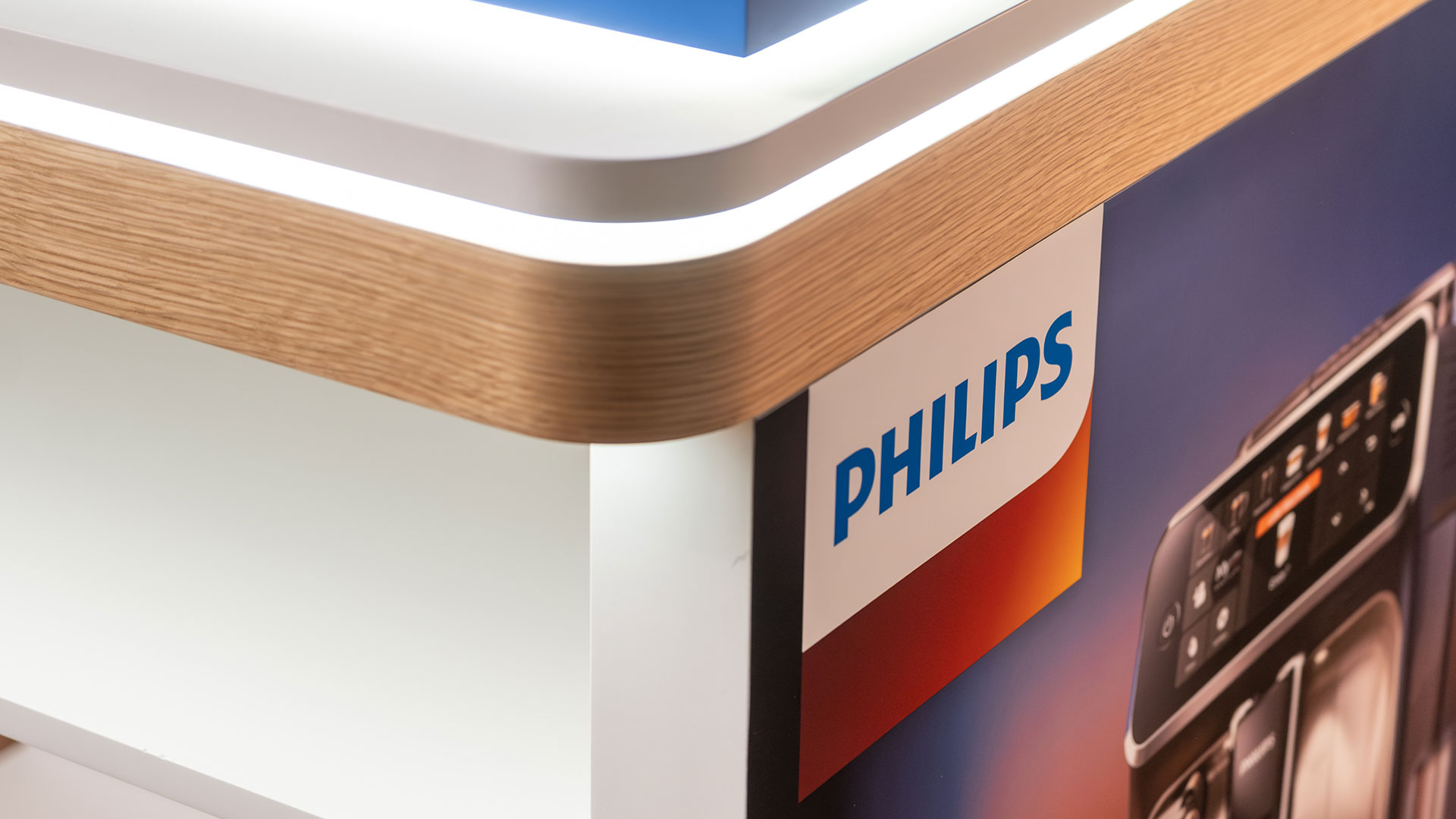
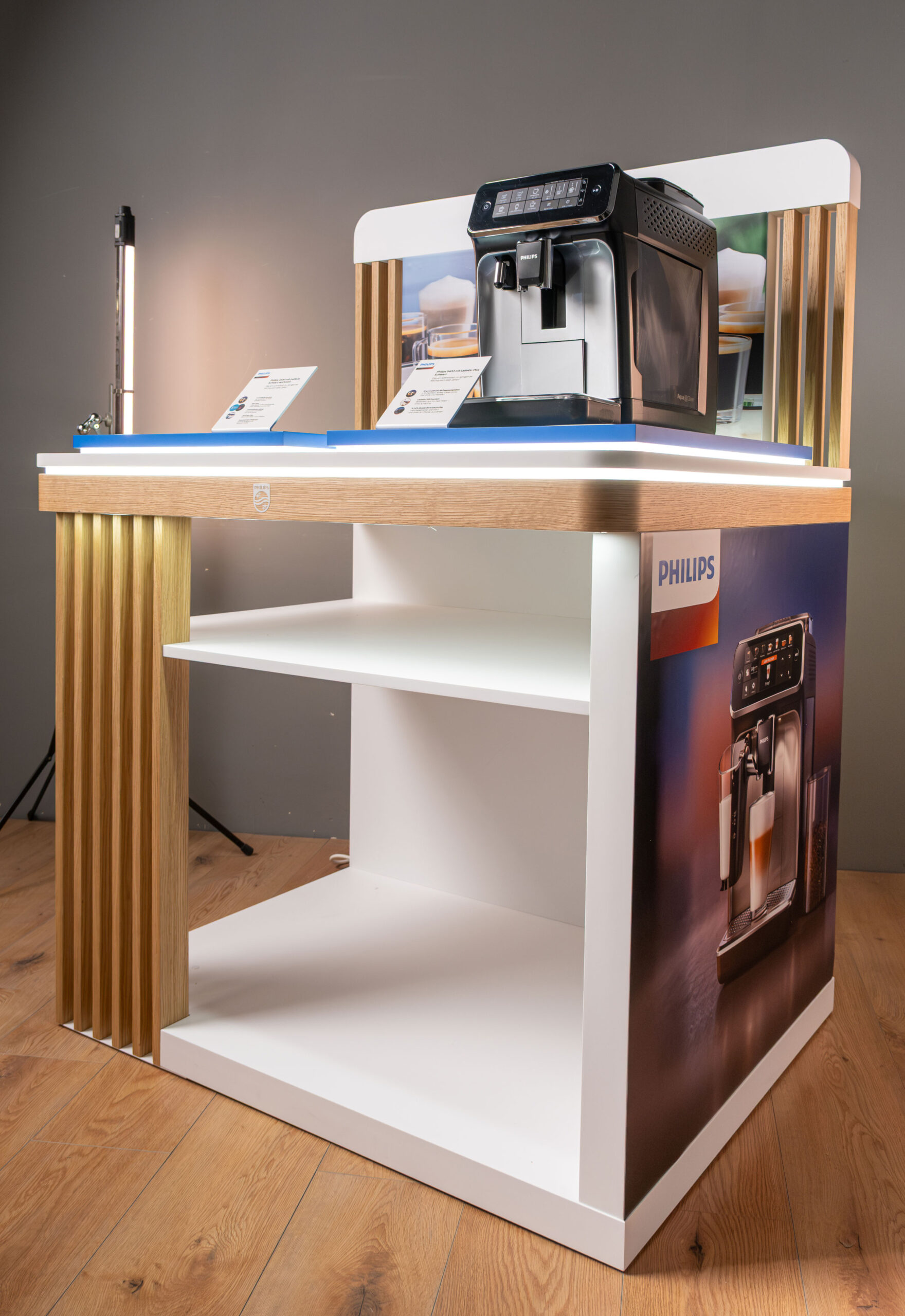
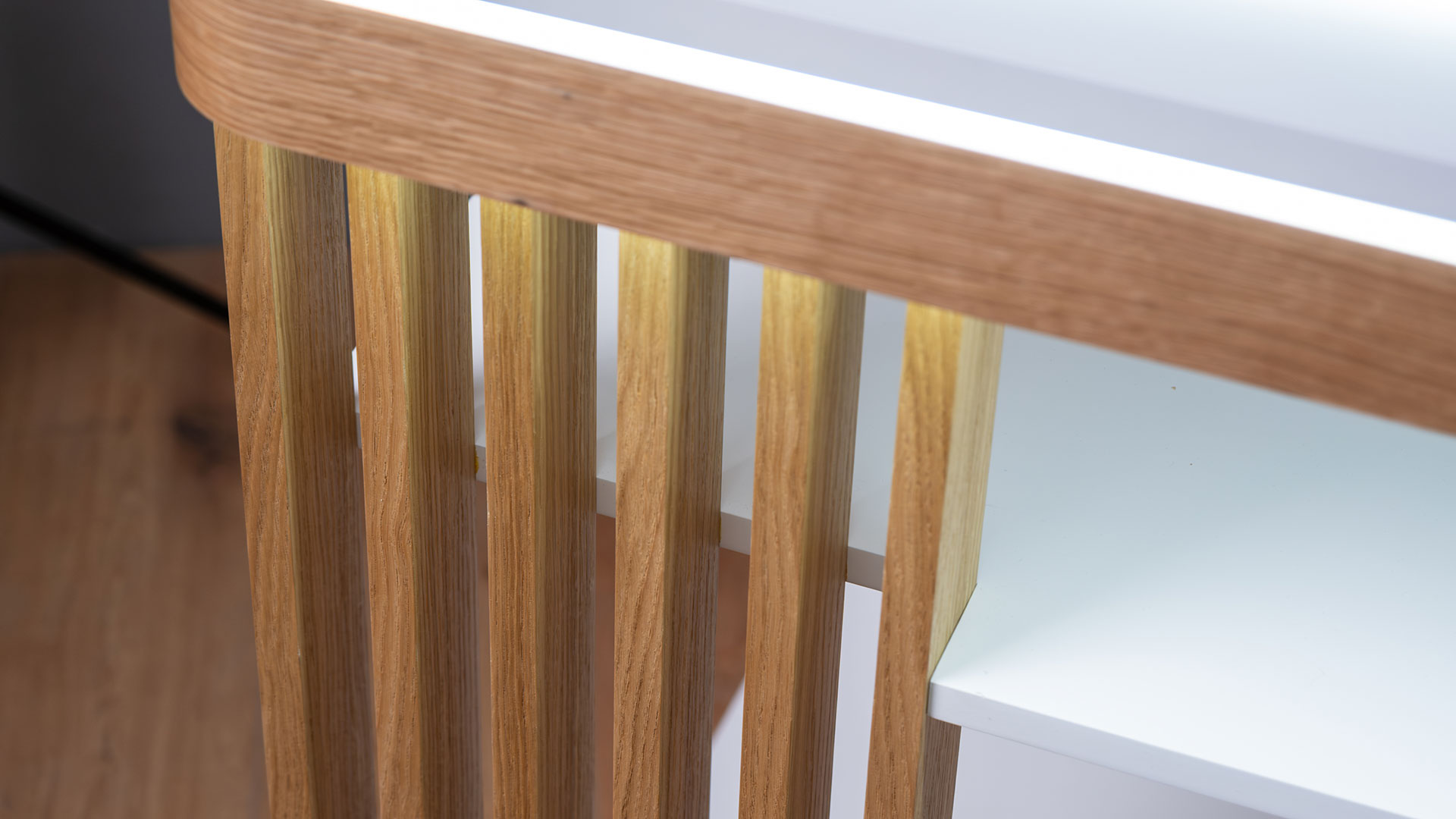
When Philips & Versuni needed a different model for their core categories in Germany, BGR was tasked with engineering a long-term retail platform: endcaps that function as permanent retail furniture, not seasonal display. The scope spanned coffee, floorcare, personal care and IPL, demanding construction that held up to years of in-store use, lighting and electronics that didn’t fail in service, and a structure flexible enough to absorb new product launches without rebuilding the unit.
Each endcap began as a fixed engineering specification, then moved through BGR’s full production chain in sequence: build, pre-assembly, electrical fit-out, quality testing, and final installation. Every step happened inside the same operation, which kept handoffs out of the timeline and accountability in one place.
Field installation never included problem-solving. By the time a unit arrived at the retailer, the lighting was wired, the screens were calibrated, the finishes were sealed, and the structure was tested. Field teams placed units; they didn’t troubleshoot.
Communication zones were built around how each category sells:
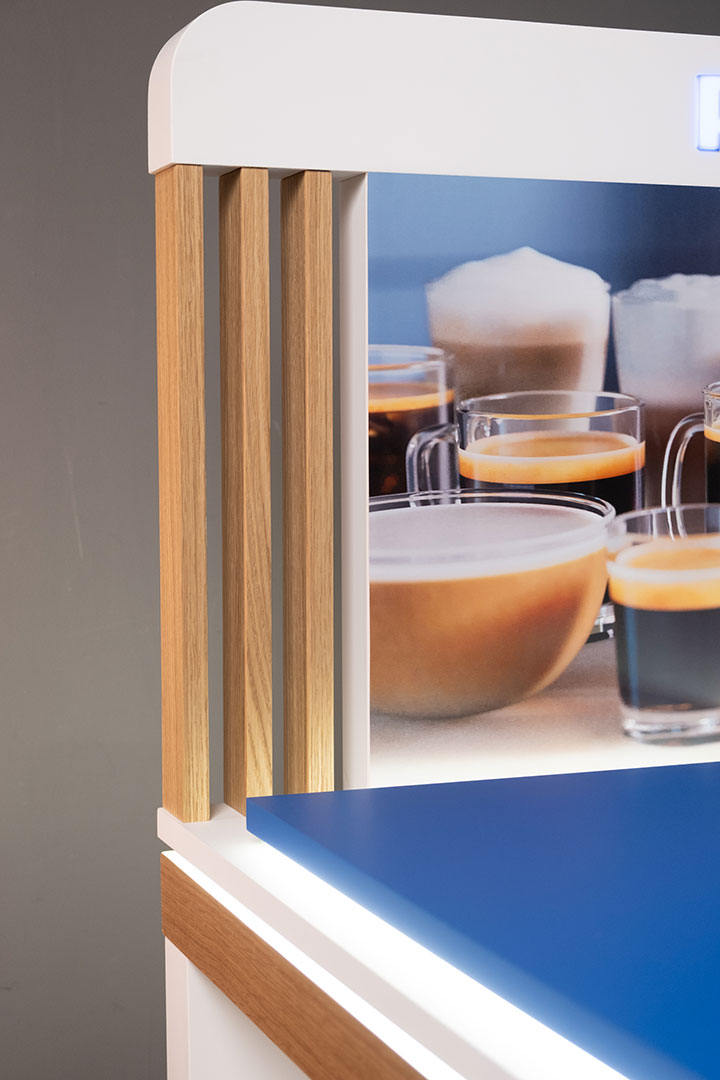
Coffee & Personal Care: Backlit panels carried the core product claims, positioned where the shopper makes the decision.
Floorcare: Integrated screens ran feature breakdowns and performance demonstrations at the point of purchase, where the technical sell happens.
Espresso (latest rollout): Introduced a new branding element across Germany, supporting the strategic shift in coffee category visibility from Saeco toward Philips at the retail shelf.
When the product assortment shifted, the endcap construction absorbed new devices without disturbing the underlying platform. The system stayed; the contents updated.
Scale: A multi-year platform running across roughly 200–300 stores in Germany.
Speed: ~2-month development-to-store window for new product integration, a fraction of typical custom retail build cycles.
Breadth: The same underlying system carries four distinct product categories – coffee, floorcare, personal care, and IPL – without category-specific rebuilds.
Strategic use: The platform has supported the brand-level shift from Saeco to Philips in the German coffee category, executing strategic repositioning at the retail shelf without a system replacement.
What BGR built for Philips & Versuni is a retail system that operates as long-term infrastructure rather than recurring expense, holding brand presence for the client and removing rollout risk for the retailer.
Related Case Studies
Subscribe
See beyond the surface. Subscribe to our insights and monthly look at the global businesses.